Simple Homeschool Organization For Small Spaces
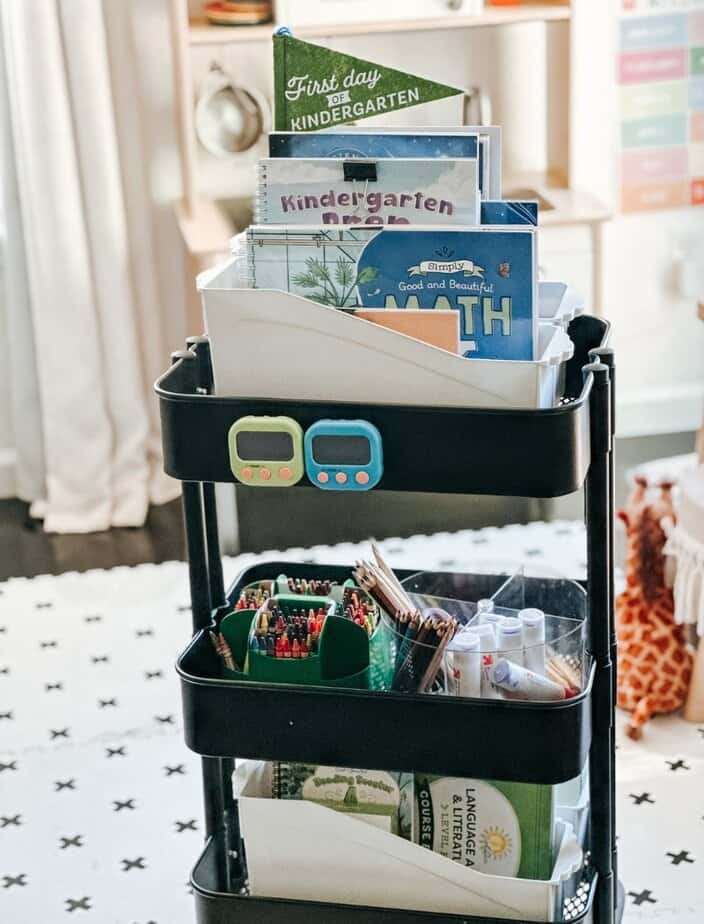
Homeschooling has been such a wonderful experience with my kids. As a homeschool mama, I’m always looking for simple ways to store all the resources we gather throughout the year. Since we don’t have a dedicated homeschool room yet, I put together a simple homeschool organization for small spaces system that works perfectly for small spaces.
Affiliate Disclaimer: This post may contain affiliate links, which means I receive a small commission if you purchase through my links at no additional cost!
Homeschooling has become a beautiful journey for my family, but let’s be honest—keeping all the resources we’ve gathered over the year can get overwhelming. From curriculum books and craft supplies to everyday toys, the materials add up quickly! Not having to search the whole house for a pencil when it’s time for schoolwork is the biggest reason why I rely on my homeschool organization system.
Homeschool organization doesn’t have to be complicated. With a little creativity and a few storage solutions, you can turn a corner, closet, or even a single shelf into a functional homeschool space to store all your supplies. The key is creating a setup that keeps your learning materials in one place and easily accessible.
In this post, I’ll share simple strategies that have worked for me. The strategies are great if you have a small space, or you don’t have a dedicated room for homeschooling.
Other Homeschooling Post:
My Small Space Setup
I don’t have a dedicated homeschool room just yet, so I used a small area in our main living room. This is the space that we use the most in our home, so it made sense to set up our homeschool area in that part of our home. I created a system that fits into our everyday lifestyle.
- A Rolling cart that holds everyday curriculum, and learning resources.
- Another rolling cart that holds craft supplies, markers, crayons, and small manipulates like play dough and sensory bin fillers.
- Every day caddy, This caddy contains the essentials. Pencils, glue, crayons, markers, etc.
When we are done with lessons, everything goes back into its designated space for the next day.
Step 1: Decided Were Your Homeschool Zone Will Be
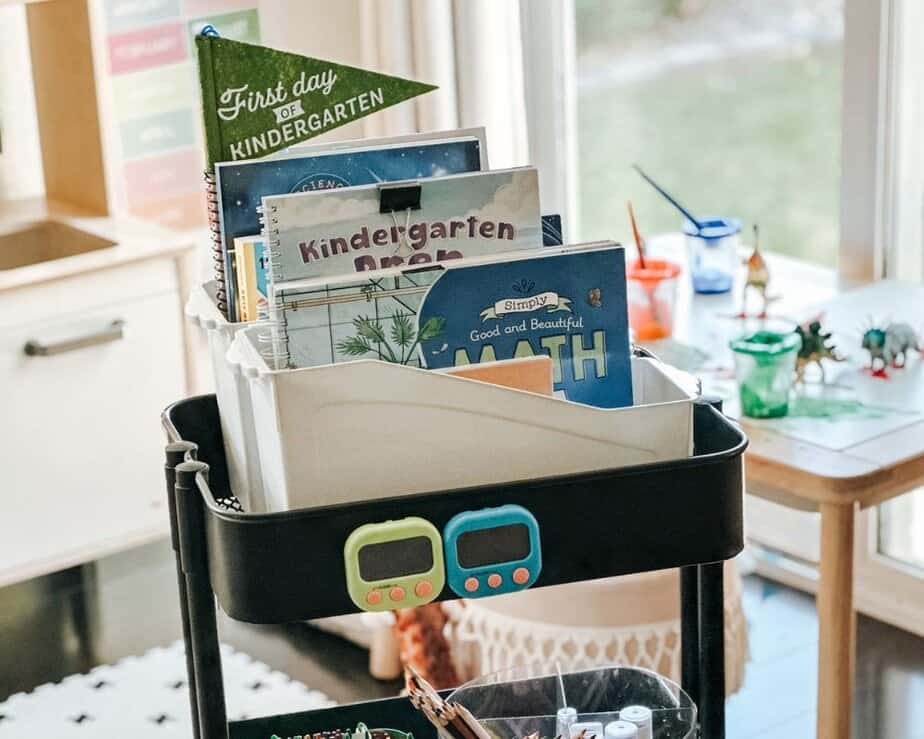
A homeschool zone can be as simple as a small area next to your dining room table or a spot in the family living room. For me, I use a rolling cart that we keep next to my kids’ play area in our main living room. This setup works best because it’s where we spend most of our time as a family.
Here are some questions to ask yourself when deciding on your homeschool zone:
- Where do we spend the majority of our time as a family?
- Where can I store supplies without creating extra clutter in the house?
- Do I prefer to move our learning space around, or keep it stationary in one area of the home?
Step 2: Vertical Systems Work Best For Small Spaces
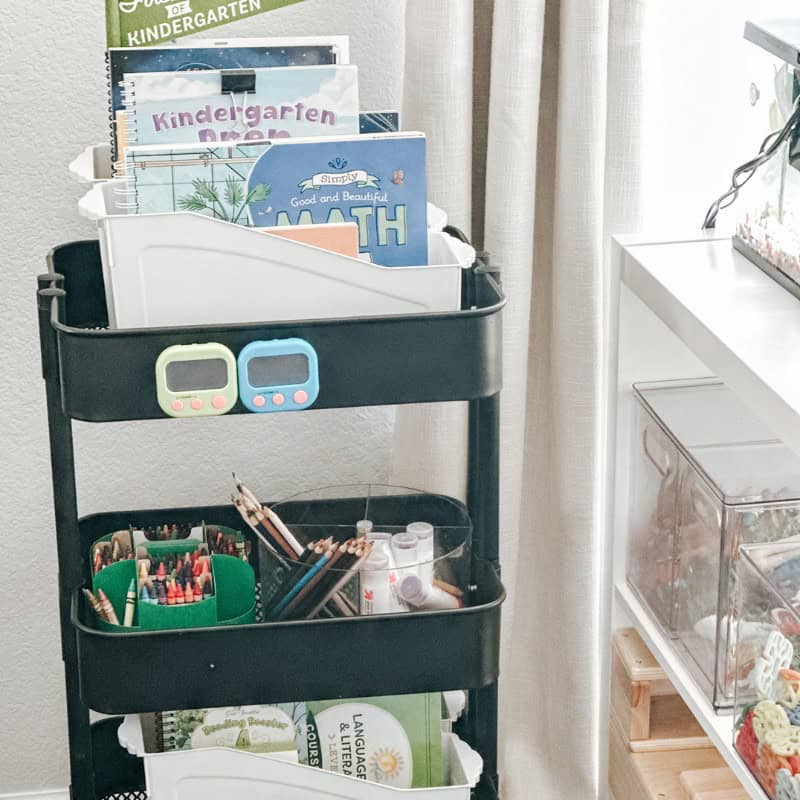
When floor space is limited, think up, not out. Use your walls, and carts to maximize space. For me I use wall book shelves a lot, and rolling carts to store most of our homeschooling curriculum.
- Wall shelves – Perfect for books, bins, or baskets.
- Hanging file organizers – Store worksheets, printable, and lesson plans.
- Rolling Carts – Hold scissors, craft supplies, and curriculum supplies.
Step 3: Rolling Carts Are Best For Homeschool Organization For Small Spaces
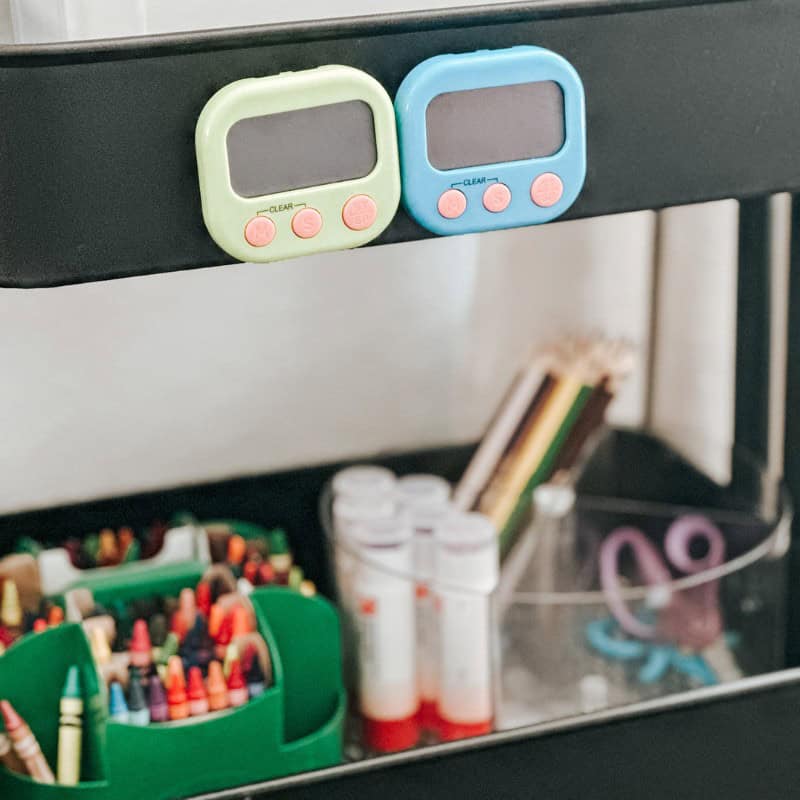
Rolling carts are by far the best decision I’ve made when it comes to homeschool organization for my family. They keep everything we need accessible and ready to go—no more running around trying to gather supplies. I can roll the cart to the kitchen if we’re working there, or move it to the kids’ play area. Everything we need is in one convenient, movable space.
Organize carts by subject, child, or activity. For example:
- Top shelf: pencils, crayons, notebooks.
- Middle shelf: workbooks and current curriculum.
- Bottom shelf: manipulative, games, or art supplies.
When the school day is done, put everything back and roll the cart back to its designated spot.
Step 4: Baskets, Bins, and Boxes
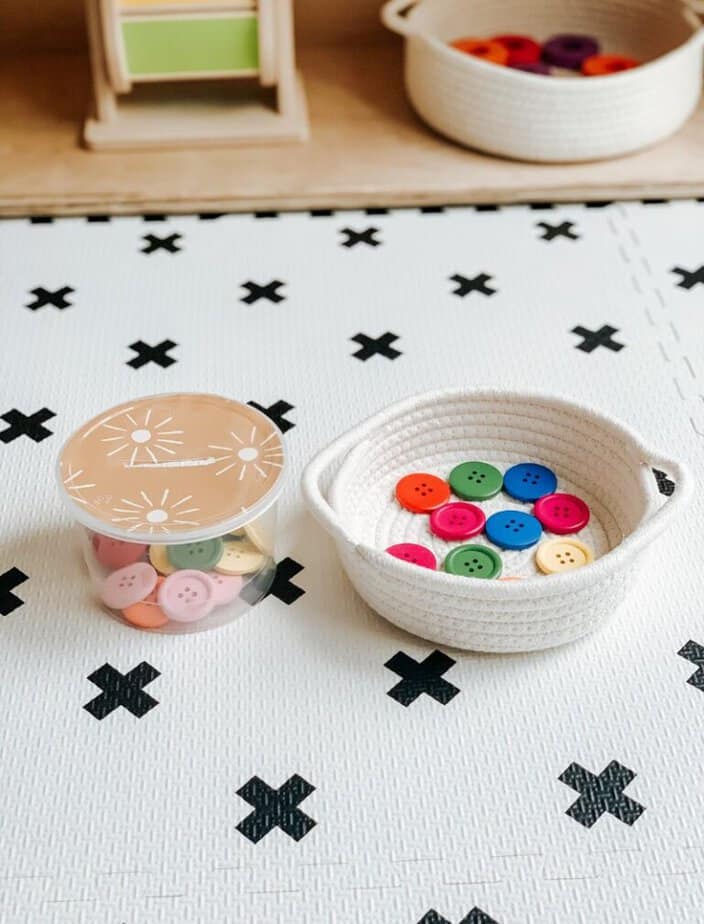
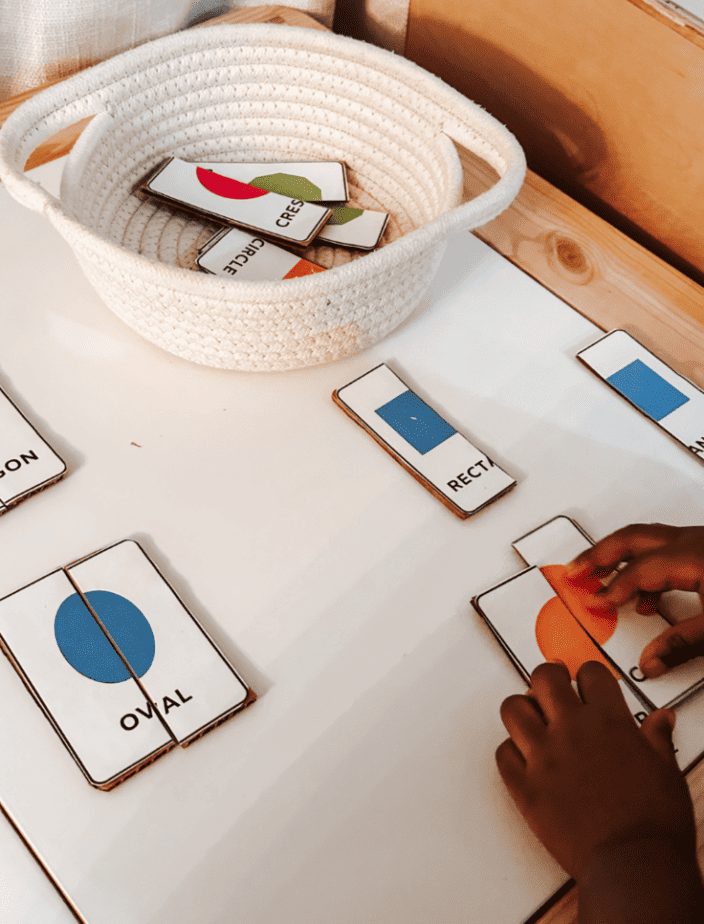
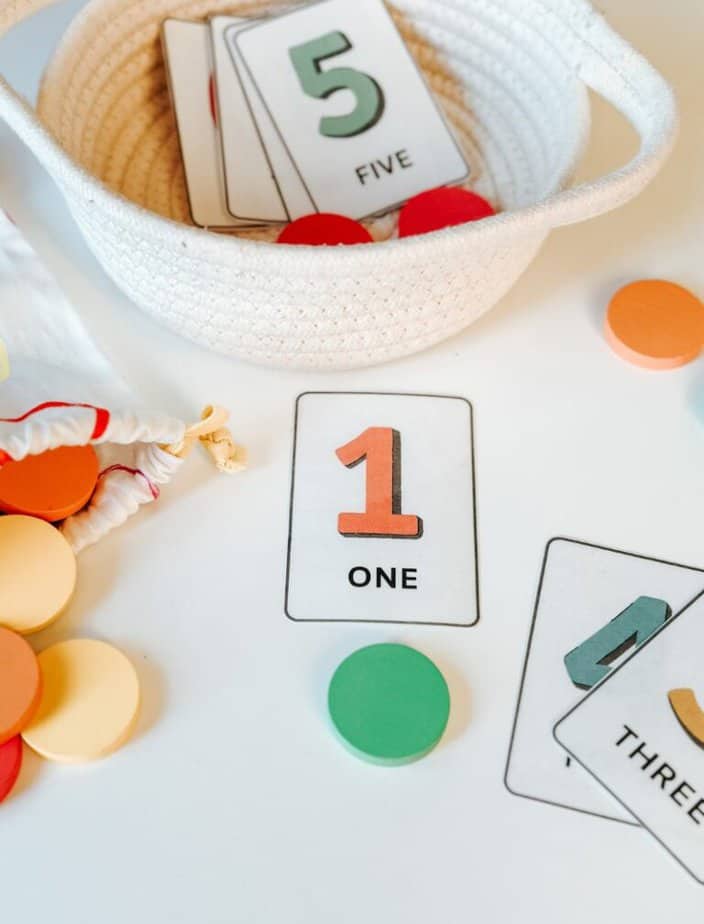
Next to having a rolling cart, this is the best addition you can make to your homeschool organization system. Containment is key, and keeping things in bins, baskets, or even boxes is a total game changer.
For older kids, you can easily label the bins and baskets so they know exactly where to find what they need—and just as importantly—where to put it back when they’re done.
- Clear bins – Great for math manipulatives or small supplies.
- Labeled baskets – One for each child or subject.
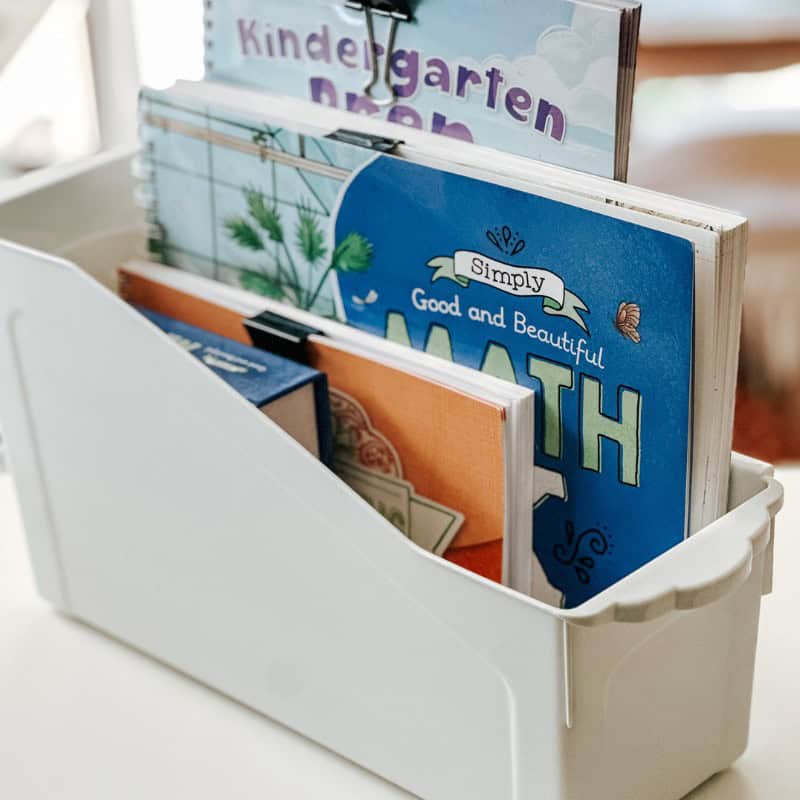
- Magazine holders – Store notebooks, folders, and workbooks upright.
Step 5: Portable Homeschool Caddy
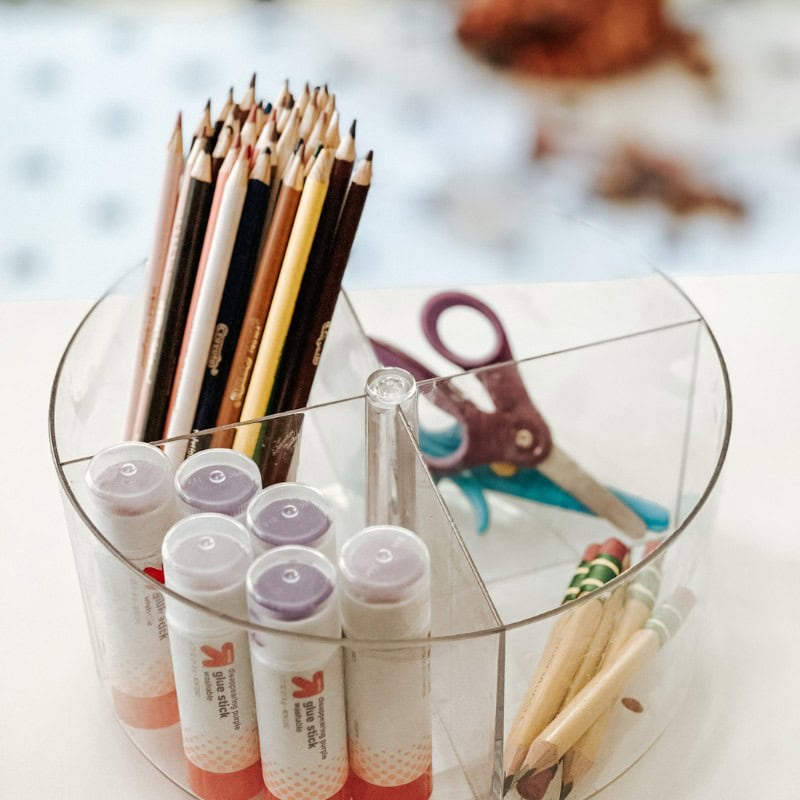
On the days when you don’t want to pull everything out from the rolling cart, having a portable homeschool caddy comes in handy. A caddy can hold your everyday essentials like pencils, markers, glue, scissors, and crayons. Simply place it on the table during lessons, then tuck it away when you’re done.
A portable caddy also keeps small manipulatives in one place, preventing them from getting scattered around the house.
Step 6: Daily Lessons Bin
I like to have a daily lessons bin for my kids—this holds the work they will complete for that day. Every evening, I go through their curriculum and pull the lessons they’ll need for the next day. Whatever those lessons are, that’s what I place in the daily bin.
For my kindergartener, this typically includes math, language arts, handwriting, and science. I know as she grows, that will change.
Having a daily lessons bin keeps your homeschool routine streamlined and prevents you from scrambling every morning.
Step 7: Get The Kids Involved
My kids are still young, but they already know where the homeschool cart and supplies are stored. My daughter can grab what she needs and put it back where it belongs, thanks to the homeschool system I created.
I believe that when children are involved and take ownership of their learning spaces, they’re more likely to respect those spaces and help keep them organized.
Remember, organization isn’t about perfection—it’s about creating a system that works for your family. Start small, test out a few ideas, and adjust as you go. Soon, you’ll find a rhythm that keeps both your home and your homeschool running smoothly, no matter how little space you have.