Fun Alphabet Sensory Bin For Toddlers And Preschoolers

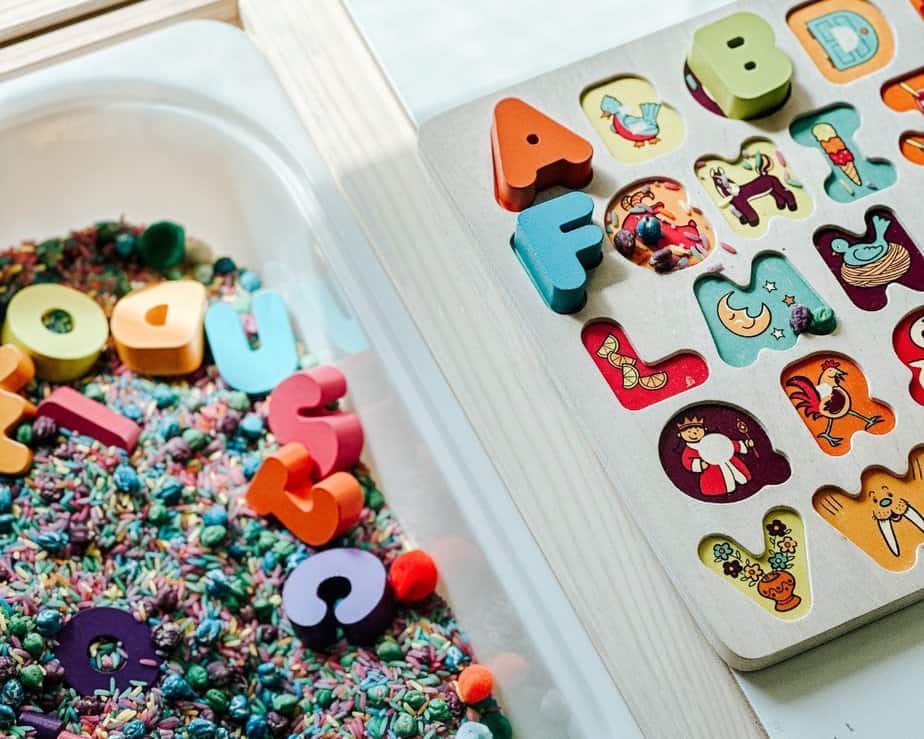
Is your little one learning the alphabet? This alphabet sensory bin is the perfect hands-on activity for toddlers! We love sensory bins and puzzles, so combining the two was a no-brainer — and it turned out to be super fun for both my toddler and kindergartener.
This activity is quick to set up, engaging to play with, and an excellent way for toddlers to practice letter recognition while learning the alphabet. In this post, I’ll show you exactly how I set up this alphabet sensory bin so you can try it at home, too.
Affiliate Disclaimer: This post may contain affiliate links, which means I receive a small commission if you purchase through my links at no additional cost!
Other Alphabet Blog Post:
Sensory Bin For Learning The Alphabet
Children learn best when they can move, touch, and explore. Sensory play isn’t just messy fun—it actually helps kids build important skills.
Here’s what an alphabet sensory bin supports:
- Letter recognition – Handling letters helps kids connect shapes to names.
- Fine motor skills – Scooping, digging, and picking up letters strengthen hand muscles needed for writing.
- Language development – Talking about letters, sounds, and words builds vocabulary.
- Sensory exploration – Bright colors, different textures, and fun fillers stimulate curiosity.
- Independent play – Sensory bins encourage kids to play and discover at their own pace.
What You’ll Need
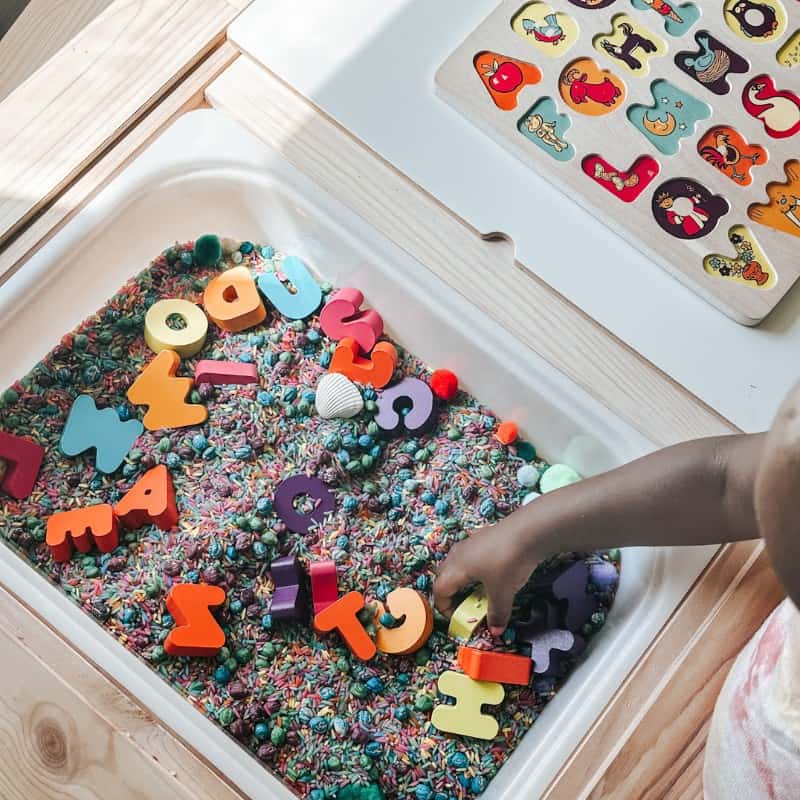
This alphabet sensory bin is versatile and can be recreated using what you already have at home! Here is a list of things you could use to make a similar alphabet sensory bin at home:
- Sensory Bin Table or Containers
- Sensory Bin Filler ( We used rice) You can use whatever fillers you have at home already.
- Alphabet Puzzle, this works best for when they fine the alphabet pieces and can put them back into the correct spot on the puzzle.
- Sensory Bin Tools ( cups, spoons, bowls, etc)
- A large shallow plastic bin or tray
- Filler of your choice (colored rice, beans, pom-poms, or shredded paper)
How To Make A Fun Alphabet Sensory Bin
Making a fun alphabet sensory bin really doesn’t require much! Use this post as inspiration to gather items you already have at home and recreate something similar. The goal isn’t to copy my exact alphabet sensory bin, but to use it as a guide to create your own version with the same concept.
The purpose of this activity is to help toddlers learn the alphabet and start recognizing letters in a fun, hands-on way.
Why Toddlers And Preschoolers Love Sensory Bins
Kids learn best through play. As a preschool teacher for many years, I know this to be true — I’ve taught countless children the alphabet using activities just like this one.
Children are naturally curious, and they absorb so much by exploring and engaging with the world around them. Sensory bins are an excellent tool for hands-on learning, allowing kids to play while practicing important skills — whether it’s learning the alphabet or exploring any other concept.
The best part? This activity can be set up in just minutes if you already have a dedicated sensory area for your kids. And if you don’t, no worries — it still won’t take long to put together!
Benefits Of This Activity
This activity is not only fun — it also comes with a few great benefits that I love. Here they are:
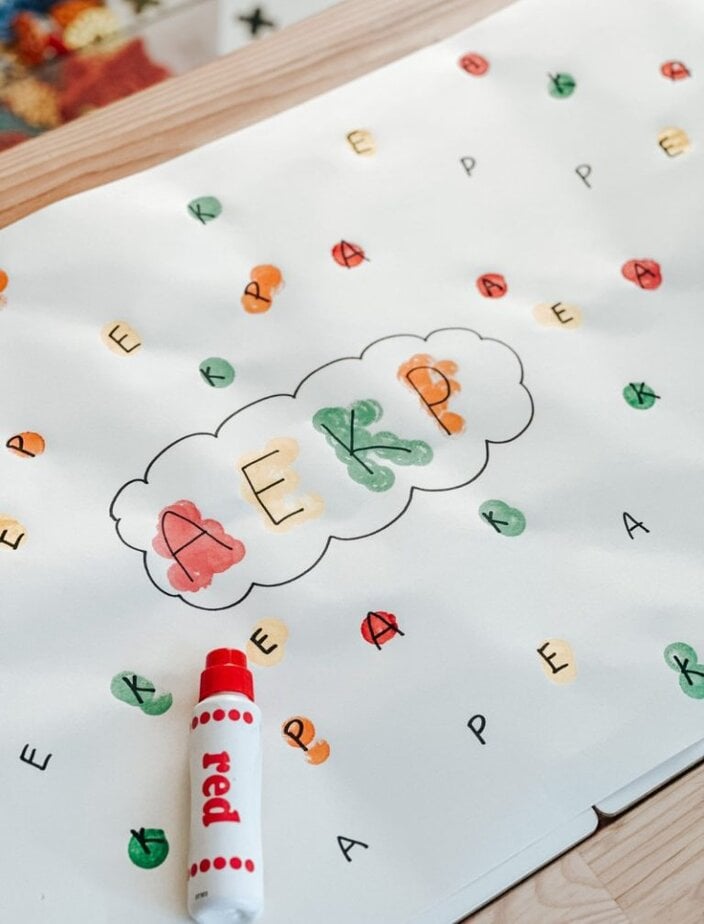
- Alphabet Recognition: Kids practice matching letters and placing them in the correct spot.
- Creativity and Exploration: This open-ended activity encourages kids to play freely while they learn.
- Problem-Solving: Children search for the hidden letters and figure out where each one belongs on the puzzle.
Extensions And Variations
Activities like this can easily be changed out for the season or adapted to match a specific learning theme. Here are a few fun variations you can try:
- Counting Bin: Fill the bin with small manipulative. Kids can count the items and place them on the correct flashcard with the matching number.
- Name Bin: Hide the letters of your child’s name in the bin and have them find and arrange the letters to spell their name.
- Color Sensory Bin: Use different colored letters and have your child match them to pieces of paper or cards in the same color.